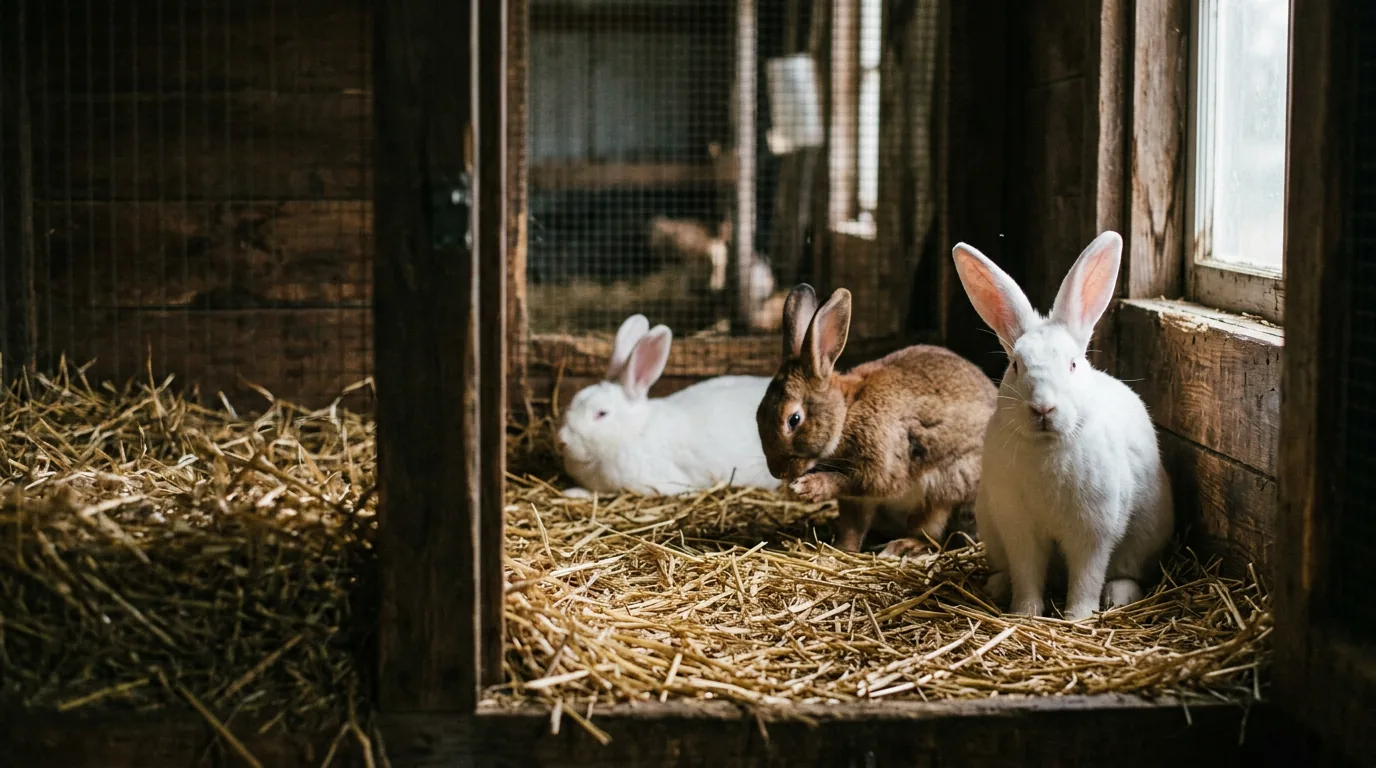
�0 Raising Rabbits: A Practical Guide
The quietest, most space-efficient protein on any homestead — housing, breeding math, and processing honestly.
The quietest, most space-efficient protein on any homestead — housing, breeding math, and processing honestly.
Overview
Meat rabbits are domesticated rabbits (breeds like New Zealand and Californian) raised for lean, high-protein meat, plus valuable manure and pelts. They're prized on homesteads for their efficiency, quiet temperament, small footprint, and legality in many places where other livestock aren't allowed. A basic breeding setup is a trio: one buck and two or more does.
Why It Works
Rabbits convert forage, hay, and pellets into meat with impressive efficiency and a fast reproductive cycle (a doe's gestation is about a month, and kits grow to butcher weight in roughly 8-12 weeks). Their manure is unusually gardener-friendly: unlike chicken or cow manure, it's 'cold,' meaning it won't burn plants and can go straight onto beds. Their main vulnerability is heat -- rabbits tolerate cold well but suffer and die in high temperatures without shade, ventilation, and cool water.
What You Get Out of It
- Compact, quiet, efficient home meat production.
- Premium 'cold' manure for the garden (no composting needed).
- Homesteading in cities/suburbs where other livestock are restricted.
- Pelts and fiber (some breeds).
- A calm, kid-friendly introduction to raising livestock.
Key Principles
Proven principles: (1) Manage heat first -- rabbits die from heat, not cold; provide shade, airflow, and cool water. (2) Feed quality pellets + unlimited grass hay for gut health. (3) A trio (buck + does) is an efficient, productive starter. (4) Rabbit manure is a top-tier, ready-to-use garden fertilizer. (5) Keep hutches clean, dry, and predator-secure with good ventilation.
Step-By-Step
Step What to do Secure, shaded, well-ventilated hutches off the ground; wire floors or clean bedding; 1. Housing predator-proof.
- 2. Stock a trio Start with a proven buck and two does of a meat breed (e.g., New Zealand/Californian).
Quality rabbit pellets + unlimited grass hay + clean water; add safe greens/forage in 3. Feed moderation.
- 4. Beat the heat Shade, airflow, frozen water bottles in summer -- heat is the #1 killer.
Breed does on a schedule; kits reach butcher weight in ~8-12 weeks with the doe then 5. Breed & grow rebred.
Apply the 'cold' droppings straight to garden beds, or add to compost/worm bins for a 6. Use the manure boost.
If you get one thing right, make it heat management. Rabbits handle winter far better than a hot summer day -- shade, ventilation, and cool water save lives. Everything else (feed, breeding) is routine.
Common Mistakes & Cautions
- Heat is deadly -- provide shade, ventilation, and cooling in summer.
- Keep hutches clean and dry to prevent respiratory issues and sore hocks.
- Predator-proof housing (dogs, raccoons, snakes) and secure latches.
- Check local rules; ensure humane, food-safe processing practices.
- Introduce greens gradually to avoid digestive upset, especially in young rabbits.
Gear & Supplies
- A proven meat-breed trio from a reputable breeder.
- Shaded, ventilated, predator-proof hutches; feeders, waterers, nest boxes.
- Quality pellets + grass hay; summer cooling supplies (frozen bottles).
- Basic health kit and clean processing setup.
The Regenerative Loop
Rabbits are a loop unto themselves. They turn hay, garden greens, and forage into lean protein for you -- and their 'cold' manure goes straight onto your garden beds or into your worm bin to supercharge compost. Garden trimmings and weeds feed the rabbits; the rabbits feed the soil; the soil feeds the garden that feeds you and the rabbits again. Add their pelts and the fact that they need almost no space, and rabbits might be the most efficient single node in the whole regenerative homestead cycle.
The FarmFit Take
Rabbits are the quiet MVP of homestead protein: compact, efficient, legal almost anywhere, and doubling as a premium manure factory for your garden. Manage the heat, feed pellets plus unlimited hay, start with a trio, and keep hutches clean and secure. Few animals give this much food and fertility from this little space
- a true regenerative workhorse.
REFERENCES
- University Extension rabbit production guides (housing, feed, health).
- Cooperative Extension resources on rabbit manure as fertilizer.
- Meat-rabbit breeding and management references.
How It All Connects
The small-footprint answer where chickens aren't enough and goats are too much.
Where To Go Next
Heat is what kills rabbits, and it kills them fast — Rabbit Health and Heat covers the warning signs and the cooling routine that actually works, alongside the common illnesses worth recognising. If you are raising them for meat, Freezer Strategy for a Whole Animal and Pressure Canning Meat cover what to do with more protein than fits in a freezer.
Get the printable one-page PDF version — free, straight to your inbox.
Related Guides
Common Questions
What is Raising Rabbits used for?
Traditionally and in current practice, raising rabbits is used for rabbits, meat, homestead protein, small livestock. The sections above cover what the evidence actually supports versus what is traditional use only.
How do I prepare raising rabbits?
The How To Use It section above covers preparation, form and typical amounts. Preparation method matters more than most people expect — the same plant prepared two ways can behave very differently.
Is raising rabbits safe?
The Safety and Cautions section above lists the known interactions and contraindications. Safety depends on your own health conditions and medications, so check with your doctor or pharmacist before starting anything new.
How long before raising rabbits works?
It depends entirely on what you are using it for. Acute uses may act within hours; anything working through the body's regulatory systems generally needs several weeks of consistent use before you can judge it.
Can I use raising rabbits with prescription medication?
Possibly, but this is exactly the question to ask a pharmacist rather than the internet. Pharmacists check interactions for a living, the consultation is usually free, and herb-drug interactions are genuinely common.
Get the printable version
Download this guide as a clean PDF for your medicine cabinet — plus new guides as they publish.
Educational and informational purposes only. FarmFitUSA content is not medical or veterinary advice and is not intended to diagnose, treat, remedy, or prevent any disease. These statements have not been evaluated by the FDA. Consult a qualified professional before acting on anything here, and call a vet or a doctor when the situation warrants it.